Create Custom Tarot Cards: A Designer's Print Template Guide
For designers, entrepreneurs, and creative hobbyists, the idea of producing a physical deck of cards often feels daunting. The logistics of sizing, layout, and professional printing can halt a brilliant project before it begins. A dedicated Tarot Card Print Template eliminates these barriers, providing a structured, reliable foundation for your creative vision. This isn't just about printing; it's about transforming your digital art into tangible, market-ready products with precision and ease. The appeal lies in its straightforward, practical design—it’s a tool built for action, not just inspiration.
Anatomy of an Effective Card Template System
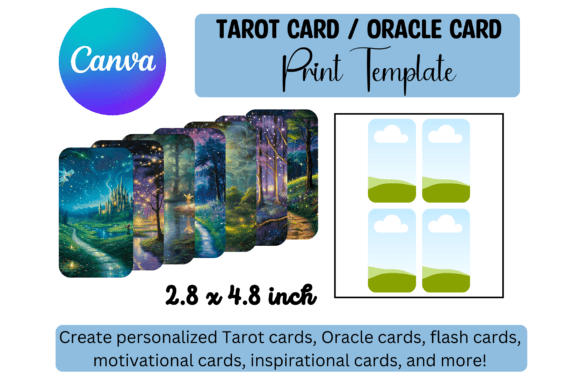
A quality template does more than just provide a frame. The core offering typically includes two essential components. First, a layout for printing multiple cards on a single standard sheet, such as arranging eight 2.8" x 4.8" cards on 8.5" x 11" paper. This is invaluable for test prints, crafting personal decks, or producing small batches for local craft fairs. The second component is a single-card canvas of the same dimensions, perfect for detailed work on individual designs or for creating one-off pieces like personalized thank you cards or motivational quotes.
The real power emerges from how this integrates with accessible design software. Using a platform like Canva, the process becomes a drag-and-drop exercise. You place your artwork, typography, or photography into the pre-sized frames. This workflow is a game-changer for those who may not be proficient in advanced design suites. It democratizes production, allowing a blogger to create a set of inspirational flash cards or a small business owner to prototype a line of oracle cards without a steep learning curve. The consistency of the 2.8" x 4.8" dimension ensures that every card, whether part of a 78-card tarot deck or a set of six playing cards, maintains a professional, uniform feel.
Beyond Tarot: The Versatile Canvas for Multiple Projects
While named for tarot, the utility of this print template extends far into commercial and personal branding. Consider a graphic designer creating a series of social media graphics that need to be printed as tangible promo cards for a conference. The template guarantees the final printed piece will have the correct bleed and trim. For packaging design, these dimensions work beautifully for hang tags, product inserts, or loyalty cards that accompany physical goods.
Entrepreneurs on platforms like Etsy can leverage this system to rapidly test product ideas. Design a set of motivational affirmation cards, print a small run using the multi-card layout, and gauge customer response before investing in a large, offset print order. This low-risk approach to product development is a strategic advantage. The templates also serve as excellent design assets for creating custom learning toys for children, unique business card inserts with a memorable twist, or even a series of branded thank-you notes that reinforce a company's visual identity.
Practical Workflow: From Digital File to Physical Card
Achieving a polished result hinges on understanding a few key design principles. First, treat the template frame as your safe area. Critical elements—text, logos, key imagery—should remain comfortably within this boundary to avoid being cut off during trimming. Second, consider the final print medium. If you're printing on standard cardstock at home, your color choices might lean towards slightly higher contrast to account for printer variations. If you're sending files to a professional print shop, you can adhere more closely to your brand's exact color palette.
Font selection is crucial for readability at this scale. A display font with intricate swashes might look stunning as a title on a large poster but could become illegible when reduced to a card caption. Pair a clear, sans serif font for body text with a more expressive script font or handwritten font for titles. Always print a test sheet on plain paper first to check alignment, color fidelity, and text clarity. This step saves time, ink, and frustration. Remember, the goal is to create a cohesive brand identity across your deck or set, so maintain consistent margins, typography, and visual style.
Choosing the Right Template for Your Creative Goals
When evaluating a Tarot Card Print Template, look for clarity in the instructions and ease of access. A straightforward PDF with a direct link to the editable file in your preferred software is ideal. The best templates feel intuitive, allowing you to focus on the creative act of design rather than wrestling with technical specifications.
Think about your primary use case. Are you a content creator designing a limited-run deck for a Patreon reward? The multi-card print layout is your best friend. Are you a brand strategist prototyping a set of premium client thank-you cards? The single-card canvas allows for meticulous attention to detail. The versatility to switch between batch production and single-item creation is what makes this a valuable piece of any creative's toolkit. It turns the abstract idea of "making cards" into a concrete, achievable task, empowering you to bring your unique visions into the physical world efficiently and professionally.